
Empire Court Docket Searches
An Empire court docket search works best with one step first. Separate the village file from the court file. Zoning notices, planning materials, and hearing records sit with the village custodian. An Empire ordinance matter can turn into a municipal civil infraction or another judicial case. Then the 86th District Court becomes the route. Not sure which court level applies? MiCOURT Case Search is the statewide starting point. One search there can return a statewide summary. It may also show a local register, a calendar entry, a payment status, or a clerk-held document.
Gather the right key before you search. Save the Empire notice, citation, ordinance reference, or case number. A complete case number beats a common name. MiCOURT's name search takes Last Name or Business, with optional first name, middle name, and birth year. Its case-number route uses Year, Number, and Type. Is an Empire record missing online? Go to the court office or the public terminal next.
- Identify whether the Empire item is a village record or a judicial matter.
- Retain the Empire ordinance, hearing notice, citation, or case-number information.
- Search MiCOURT and select the court or case category that fits the Empire matter.
- Check the 86th District Court calendar for an Empire-related setting when a date is needed.
- Contact the correct court office for an Empire register, public-terminal access, or document copy.
Empire Village Record Trail
Empire is a village of 362 people in the 2020 Census incorporated-place row. Size shapes the record trail here. Village hall and community records, the Village Nature Preserve, and zoning and public-hearing files all exist at the local level. But there is no separate Empire court system. So an Empire public record often begins as a notice, minutes, or a zoning document rather than a case number. Those papers may explain the local issue fully. Yet they say nothing about whether a court case was ever filed.
The Census TIGERweb incorporated-places table lists Empire alongside the other incorporated Leelanau municipalities.
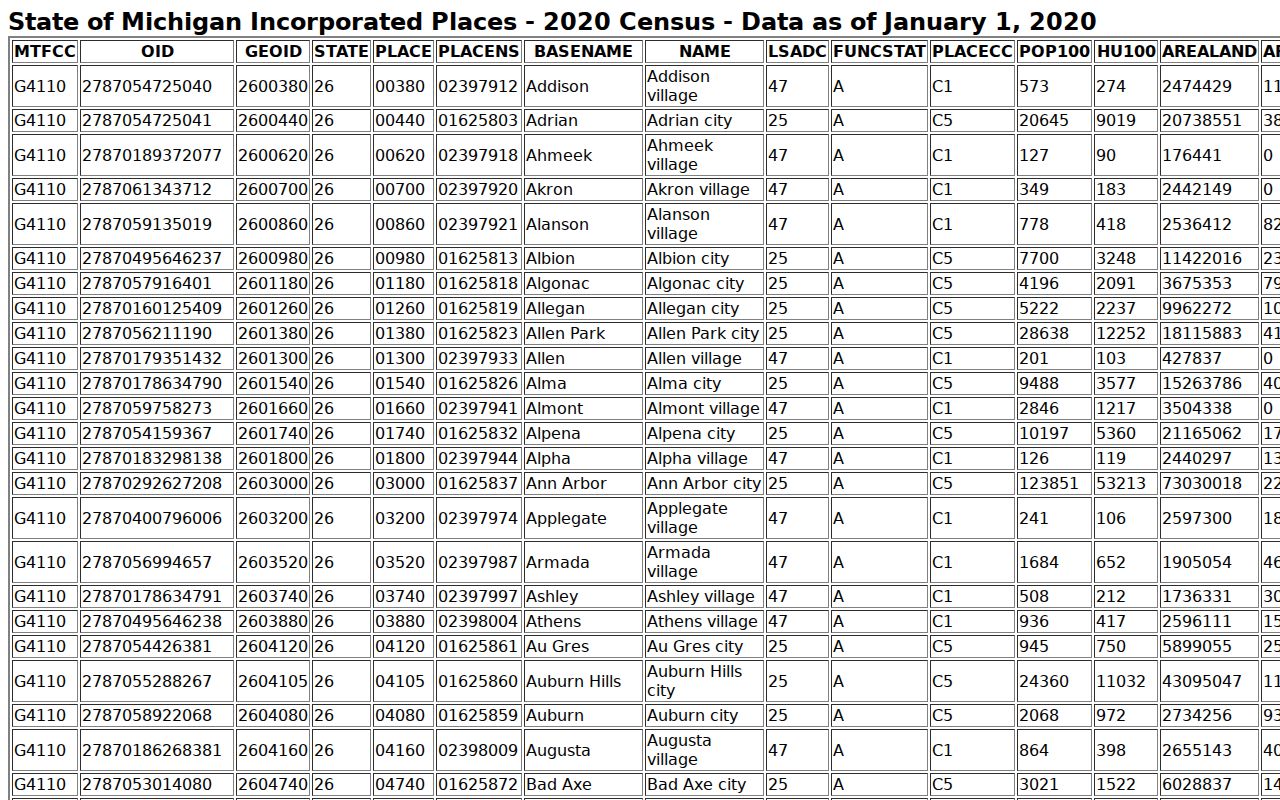
That small population does not create a local court portal. It simply explains why the village records and the county court route must stay distinct.
Inside the Empire Municipal Court
Empire has no separate municipal court, court portal, or public docket of its own. The heading above reflects a common search phrase. No operating judicial office sits behind it. Village administration keeps public hearing and zoning records. That work does not replace the court clerk or the 86th District Court register. A village record is never a court disposition.
Empire matters can still become court matters. Ordinance enforcement produces the municipal infraction. Adjudication routes to the 86th District Court under the local ordinance material. So ask first what the item is. Is it a village notice, minutes, an ordinance, or planning material? If it is a court calendar, register of actions, order, or certified copy instead, use the proper court access channel.
Empire has administrative records, not a separate judicial portal. A village document can identify the local issue. The 86th District Court is the place to verify the judicial phase when one exists.
Empire Has No Local Court Portal
Empire offers no local court webpage. That gap matters. The village posts no municipal clerk phone, public court portal, or independent court docket online. Do not invent a village contact. Do not point an Empire court search at an unrelated county or city page. The sound path is simple. Use the Empire village custodian for municipal records, and the 86th District Court for judicial information. When a result is not visible online, the court's local office can confirm the proper record route.
One more wrinkle. The 86th District Court keeps case information online. But it currently warns that criminal-case extraction to the public website is temporarily stopped while automatic set-aside records are reconciled. So an Empire criminal search that comes up empty does not prove a file never existed. Check the court level, the case number, and any access limits before concluding anything from a blank display. An Empire public record can be real and accessible even with no Empire-specific court webpage anywhere.
Finding Empire Court Dates
An Empire court date is a county-court setting. That is true once the matter enters the judicial system. The official 86th Court Calendar links Leelanau judge and pretrial displays. The public calendar shows party name, time, room, and case number columns. Careful, though. An Empire public-hearing notice is not an Empire court setting. That holds even when both involve the same property or ordinance.
Calendar information changes. A setting may be reset, adjourned, canceled, or moved. Read the latest register entry or court order before you appear. If an Empire event is missing, search the case number in MiCOURT. Then check the Leelanau display. Call the court office to ask whether the proceeding is public, restricted, remote, or listed on another shared-court calendar.
| Date | The scheduled date on the Empire-related district-court case, subject to later docket changes. |
|---|---|
| Time | The calendar time shown for the event, which may differ from the complete hearing duration. |
| Room | The room field when published through the 86th District Court calendar display. |
| Case number | The strongest identifier for checking an Empire court setting with the clerk. |
| Setting type | A hearing, pretrial, arraignment, or another scheduled event, not the full register. |
Check the 86th Court hours and holidays page before you go. It posts the current official hours and closure reference for the court.
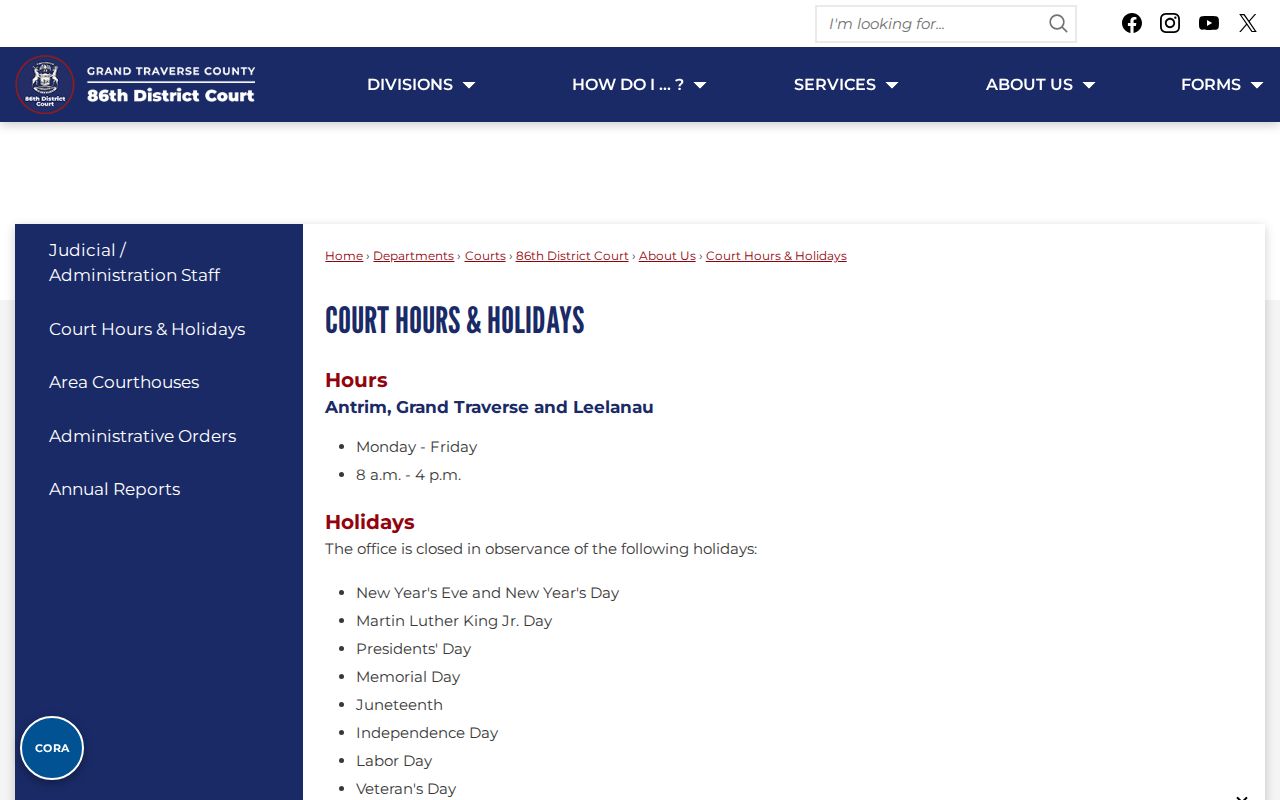
Use the live Empire court-date route and current court notice before travel. Courtroom practice and closures can change without much warning.
Empire Zoning Hearing Records
Zoning in the village of Empire leaves a paper trail. Under the Empire zoning ordinance, a public hearing requires advance notice, and the clerk keeps the minutes and records. The notice tells neighbors when a zoning issue comes up for discussion. The minutes capture what the village did. Neither document is an Empire court docket entry. Neither proves a lawsuit followed.
Keep the two tracks apart. If an Empire zoning dispute turns into an enforcement action, start with the village record, then run a docket search in the 86th District Court for any separate register or hearing setting. That order keeps local planning distinct from court jurisdiction.
- Public hearing
- A noticed village proceeding where a zoning matter is considered. It is not a court hearing.
- Minutes
- The Empire administrative record kept by the clerk for the village meeting or hearing.
- Register of actions
- The court’s chronological list of filings, orders, hearings, and other case events.
- Redaction
- Removal of protected information from a public court copy when access rules require it.
Empire Traffic Ticket Lookups
An Empire traffic ticket or civil infraction goes through the 86th District Court. The Traffic Division gives a cited driver 10 calendar days to appear or answer. You can show up in person, answer in writing, or call the court to request a hearing. Follow the instructions printed on the citation. Empire runs no separate traffic docket portal.
For payment and status, use the official district portal. It takes a case or ticket number in its direct field, or a first name, last name, and date of birth. A brand-new Empire ticket may take until the next business day to show. Paid after 3:45 p.m.? It may post the next business day or after a holiday. For a county-wide view, use the Leelanau traffic court records route.
Skip the deadline and the trouble compounds. Fees can pile up. A warrant can issue. And the court can report a license suspension. A no-show can bring a default plus an added $25 fee under the 86th Court's traffic materials. These are court-response issues. An Empire village record cannot confirm payment, a hearing result, or any court outcome.
Empire Ordinance Matters Needing Court
Some Empire ordinance matters end up in court. When that happens, keep the village file and the court file on separate tracks. The zoning ordinance, a hearing notice, or other village material identifies the local rule. It also identifies the administrative event itself. Once a matter is filed as a municipal civil infraction, or moves judicially, the 86th District Court holds the register and the setting. That is when an Empire court search truly matters.
- Identify the Empire ordinance, notice, or citation and keep the reference number or date.
- Request the Empire minutes, ordinance text, or hearing material from the village custodian if the municipal record is needed.
- Search MiCOURT and the 86th District Court route for an Empire judicial case number or setting.
- Call the district court at 231-256-8250 or use the courthouse counter or terminal if the Empire case is not online.
- Request the actual court document when a register title does not supply the operative order or result.
Note: An Empire document trail can point toward court action. It does not prove court action happened.
How Empire Cases Reach the County
Empire cases reach county court by type of matter, not through any village-court tier. Traffic matters, civil infractions, and misdemeanors all belong to the 86th District Court. Small claims and the preliminary felony stage belong there too. A bound-over Empire felony moves up to the 13th Judicial Circuit Court. Circuit civil, circuit-level family, and probate matters run through their own Leelanau records channels. Where the case was filed matters. The circuit is shared with Antrim and Grand Traverse Counties.
Docket flow: Empire village notice, ordinance, citation, or local event › 86th District Court for an applicable district matter › district resolution or felony bind-over › 13th Judicial Circuit Court › Michigan Court of Appeals if an appeal is filed.
The Leelanau County court docket overview lays out the county-wide court hierarchy. Keep an Empire search pointed at the court named in the case papers. Do not assume every shared-court record was filed in Leelanau County.
Empire Zoning Records and Court Registers
Empire zoning records and court registers can trace one local issue through two different stages. The village record shows notice, meeting action, ordinance text, and minutes. The court register shows filings, hearing settings, and orders. It also shows the disposition once a case is filed. Ask which question you are answering. Match the request to the record that fits it. Do not treat one source as a stand-in for the other.
| Empire record | What it can show | Custodian or route |
|---|---|---|
| Zoning notice or public-hearing record | Village process, notice, and administrative action | Empire village custodian |
| Minutes or ordinance text | Village meeting record and adopted local rule | Empire village custodian |
| Register of actions or court order | Judicial filing, setting, ruling, or disposition | 86th District Court or another court with jurisdiction |
Request Empire village materials from the village office first. A judicial file must come from the court that keeps it, even when the local Empire record came first.
Who Can See Empire Court Records
Michigan court-record access rules govern Empire court records held by a Michigan court. MCR 8.119 sits at the center of it. Clerks maintain case records and registers of actions, and the public generally gets access unless a rule, statute, order, or case category says otherwise. Village records go to the village custodian. Court records go through the court clerk.
Key Rules:
MCR 8.119: Courts maintain Empire-related judicial records and public registers subject to access restrictions.
MCR 1.109: Michigan document and case-number rules protect personal identifying information in court records.
Michigan Court Administration and Records Guide: Court files follow the court-rule access framework, not an ordinary public-body FOIA request.
Juvenile, adoption, mental-health, PPO, will, and other protected categories may be unavailable online or limited by rule. A blank Empire search does not explain why access is restricted. Ask the court clerk which procedure fits the specific record.
Empire Records Start With the Custodian
Every Empire records search begins with the office that actually holds the paper. Village matters include zoning files, public-hearing records, and board minutes. These sit with the village custodian in Empire itself. A court docket, order, calendar, or certified copy is a different animal. That means the 86th District Court, or whichever court has jurisdiction over the case. The village posts no direct phone line or portal for its clerk. So plan on writing or visiting.
County FOIA covers administrative records. But it is not the usual path to a court case file. The Leelanau County FOIA procedure spells out how county administrative requests work. For court records, the rules come from MCR 8.119 and the clerk's own access procedures. Be specific when you ask for an Empire court document. Name the court, the county, the case number, and the case type. Add the document title and date, the copy type you want, and how it should be delivered.
Those details let the clerk pull the right Empire record quickly. Your request will not mix up a village hearing file with a judicial case file. A tight request also respects the limits on restricted, sealed, or redacted court material.